For much of my life, I carried a quiet fear of being judged. It showed up in small ways, worrying what people might think, holding back my true opinions, or shrinking my light just to stay safe. I thought that if I could be “good enough,” I’d escape criticism. But judgment has a way of finding us, no matter how careful we try to be.
What I’ve learned is that people’s opinions often reflect their own stories, not our truth. When I began to really understand that, something softened inside me. I stopped chasing approval and started focusing on how I felt about my own choices. That’s where the real freedom began.
The Inner Critic
While I feared other people’s judgment, I didn’t realise how harshly I was judging myself. My inner voice could be relentless, whispering that I should have done better, that I wasn’t enough, that everyone else had it more together than I did.
It took time to see that this self-judgment wasn’t helping me grow; it was keeping me small. When I began to notice those critical thoughts, I asked myself a simple question:
Would I speak this way to someone I love?
If not, then why would I speak that way to myself.
Learning to respond to myself with kindness instead of criticism changed everything. I started replacing the words “I should have known better” with “I did my best with what I knew then.” That one shift turned shame into understanding, and understanding is where healing begins.
An example of this happened to me recently. One day, I tripped over a root in the ground. As I was falling, I felt that familiar flash of fear, the last time something like this happened, I ended up with a frozen shoulder for over a year. Instantly, I heard that old, critical voice say, “You stupid idiot.” But I caught myself and gently corrected it, saying instead, “It’s OK, accidents happen.” I didn’t injure myself this time, and I truly believe it’s because I responded with kindness rather than criticism. That simple shift in self-talk changed my body’s response from tension and fear to softness and acceptance.
When We Judge Others
There are also times I’ve caught myself judging others, not out loud, but in the quiet corners of my mind. And when I look closer, I can see that my judgment often says more about me than about them.
When someone’s confidence made me uncomfortable, it was usually because I longed to feel that free myself. When someone’s choices annoyed me, it was often because I didn’t understand them yet or saw life differently at that time.
It’s humbling to realise how much judgment is really about projection. But it’s also liberating, because once we see it, we can choose differently. Instead of reacting, we can pause and ask, “What is this showing me about myself?”
That’s how judgment becomes a teacher.
Choosing Understanding
Letting go of judgment doesn’t mean pretending we never have critical thoughts, it means we notice them without letting them control us. We become observers rather than participants.
For me, it’s an ongoing practice. Some days I slip back into self-criticism or worry about what others might think. But now I meet those moments with kindness. I remind myself that we are all learning, all trying, all human.
The more compassion I offer myself, the easier it becomes to extend that same compassion to others.
Because in the end, the opposite of judgment isn’t approval – it’s understanding. And from understanding grows acceptance, connection, and peace.
I hope you found this article interesting and useful. Please take look at some of my other pages or blog posts where I talk about different therapies and my own wellbeing journey. If you’d like to see my future content then please enter your email and press subscribe below and you will be alerted when I publish anything new. Thank You for taking the time to read this. Until next time, I wish you all the very best. Janet x
It’s been a while since I’ve written a personal post. I usually feel inspired to write about spreading positivity and sharing well-being advice. But, like everyone else, I’m human, and life brings its ups and downs, even as I strive to inspire others. Recently, I felt compelled to return to writing after a break, motivated by the desire to bring some light into a world that often feels overshadowed by darkness.
Today, I opened my WordPress dashboard and found this post sitting in my drafts folder. I’m not sure when I wrote it, but its message feels timeless, so I decided to share it now. This isn’t a plea for pity or sympathy but a sincere acknowledgment of how chronic illness – specifically fibromyalgia – has shaped my life. Everyone’s experience is unique, but it can be comforting and empowering to recognize the common threads in others’ stories. It reminds us that we’re not alone, and it opens the door for empathy and the exchange of coping strategies.
While I wholeheartedly believe in the power of maintaining a positive mindset, it’s just as crucial to honour and validate our struggles. For me, fibromyalgia has been a reflection of years spent denying negative emotions and consistently putting others’ needs before my own. Sharing this is part of my journey to heal, inspire, and encourage others to embrace both their light and their shadow.
My Fibro Story
I’m writing this after giving up on trying to get back to sleep, knowing I’ve had to cancel my plans for the day. Sleep deprivation often triggers a severe flare-up, and today is no exception. Lying in bed is unbearable due to the pain, yet I lack the energy for much physical activity. Right now, writing is one of the few things I’m able to manage.
I’d consider the fibromyalgia I have to be relatively mild. I don’t take any regular medication, except for the occasional painkiller at bedtime. Instead, I rely on natural approaches like nutrition and exercise, as I believe they’re the best way to manage it. However, during flare-ups, when my energy is depleted and brain fog sets in, even simple tasks become overwhelming. Remembering to take supplements or deciding what to cook feels impossible, let alone finding the motivation and energy to prepare a meal. As a result, I often resort to whatever is easy, carb-heavy foods – which doesn’t help much with staying in shape either.
I’m aware of my limitations, and I’ve learned to pace myself. If I have a busy, active day, I know I’ll need to rest the next day. I struggle with last-minute plans, as too much stimulation, such as loud noise, bright lights, strong smells, or sudden temperature changes – can overwhelm me.
That said, I rarely cancel plans, even when I’m not feeling my best, and I usually end up enjoying myself for sticking to them. Moderation is key, though. Once or twice a week is ideal, as long as the plans aren’t on consecutive days. I genuinely love seeing empty weeks on my calendar, it gives me the freedom to do what I want while leaving room for to plan social or other activities.
GUILT
The guilt that comes with fibromyalgia often leads to anxiety and depression. The anxiety stems from feeling like people think I’m making excuses or judging me, while the depression comes from the sense that no one truly understands.
Since fibromyalgia is an invisible illness, most people only see me at my best, functioning like everyone else, and tend to forget about my condition. I don’t like to draw attention to myself or complain too much, so I push through and suffer in silence. Sometimes, I even forget I have fibromyalgia and have to remind myself that I have valid reasons to rest, sit down, or take it easy.
When I lose track of what I’m saying mid-sentence or can’t recall a word, I have to remind myself it’s not early dementia or menopause it’s the brain fog that comes with fibro. Deep down, I know I’m in a bit of denial about the illness, but acknowledging it is the first step toward understanding and managing it.
The guilt often comes from not being able to accomplish the things I want to, whether it’s doing more around the house and garden, working on my projects or helping others as much as I’d like. I work as a complementary therapist, which allows me to choose my hours, so there’s no pressure there, but I still wish I could contribute more financially to the household.
With my children being older now, I ask for their help when they’re around, though there’s naturally less to do when they’re not. Still, I feel guilty that even with extra time, I don’t always have the energy to prepare healthy meals for the family. Sometimes, I don’t even want to go places with them because I can get so tired and overwhelmed. Forcing myself to go would only spoil their day by limiting what they can do.
We’re fortunate to have a motorhome, and the family enjoy weekend trips to the beach and other places. But I find it challenging to climb into the raised beds, and the seating areas aren’t the most comfortable for relaxing. I need to feel at my best to join them, and with four people, it can feel cramped. While I sometimes feel like I’m missing out on good times and creating memories, I hold on to the hope that I’ll feel more adventurous one day – I’m not giving up.
Another source of guilt is having to turn down invitations or cancel social plans. If I have a reason unrelated to my health, it doesn’t feel as bad because people tend to understand. But when it’s due to feeling tired, in pain, or overwhelmed, the guilt is much heavier. I worry that people will think I’m making excuses, judge me, or stop inviting me altogether. And then there’s the social anxiety that comes along with it…
SOCIAL ANXIETY
I’m not sure why, but I often feel a strong resistance to doing things or going places, even when it’s something I’ve planned myself. It’s almost like a panic attack, and I have to talk myself into following through. This can happen even with activities I genuinely enjoy, like a course on a subject I love.
Despite the resistance, I usually push myself to go, and I’m almost always glad I did. However, I need to differentiate between anxiety and flare-ups, as the anxiety itself can sometimes trigger a flare-up. Recognising the distinction is crucial for managing both effectively.
Sometimes it feels like the people you live with are the least understanding. Maybe it’s just my perception, but when I don’t feel up to doing something and feel guilty about it, their responses can come across as dismissive and matter-of-fact. They accept my decision, but not in a way that makes me feel understood or reassured. It’s usually just a shrug and an “OK, we won’t go then,” without any eye contact or concern for how I’m feeling. It’s probably normal in a domestic setting; after all, my decisions impact them, and I probably come across as a killjoy. I might be overthinking it, but it still causes me anxiety.
So, what do I do about it?
Because of my work and passion about self-healing and self-care, I do take my own advice, these are a few of my coping strategies:
I offer myself the compassion I need, with a loving inner voice that gently reassures me.
I acknowledge my feelings of hopelessness and frustration. A bit of self-pity it OK as long as it’s temporary.
When there are tasks I absolutely have to do, I prioritise them and pace myself.
I keep a selection of meals in the freezer so I don’t have to think about cooking on flare-up days.
I have cosy, comfortable loungewear ready for these occasions.
I maintain a list of low-energy, low-concentration activities I can enjoy, like simple crafts (embroidery, colouring books), writing blogs, or other creative hobbies.
I practice self-care by doing things that are beneficial but often get overlooked when I’m busy, like taking my supplements, applying homemade pain-relief balms, or making herbal teas from my healing herbs.
I catch up on emails, coursework (if I can focus), or simply relax by watching TV.
I use tools like my TENS machine, practice self-massage, or apply healing techniques such as E.F.T., Aromatherapy, Reiki, – essentially practicing what I preach.
I make plans for the things I’ll do when I’m feeling better, giving myself something to look forward to.
Most importantly, I frame these moments as essential “Me Time” and treat them as an opportunity for rest, healing, and self-nurturing.
It’s not all doom and gloom – I just need to let go of the guilt and practice kindness toward myself. After all, this blog and website are dedicated to promoting self-care and self-love in a holistic way. Sometimes, I have to remind myself to be a good example for the people I’m striving to support.
I hope you found this article interesting and useful. Please take look at some of my other pages or blog posts where I talk about different therapies and my own wellbeing journey. If you’d like to see my future content then please enter your email and press subscribe below and you will be alerted when I publish anything new. Thank You for taking the time to read this. Until next time, I wish you all the very best. Janet x
In today’s fast-paced world, many of us seek ways to bring our desires and dreams to fruition. While there are many techniques and strategies out there, one approach that resonates deeply with our innate human nature is natural manifestation. But what exactly does this mean, and how can we harness its power?
What is Natural Manifestation?
Natural manifestation is the process of bringing your desires into reality through alignment with your authentic self and the natural world. Unlike methods that rely heavily on effort and control, natural manifestation focuses on flow, intuition, and harmony. It’s about creating a life that feels organic and true to who you are, rather than forcing outcomes through sheer willpower.
The Principles of Natural Manifestation
Alignment with Your True Self: The foundation of natural manifestation is understanding and aligning with your true self. This means recognizing your deepest desires, values, and passions. When you are clear about what genuinely matters to you, you can focus your energy on these areas, making it easier for them to manifest in your life.
Tapping into Nature’s Rhythms: Nature operates in cycles and rhythms, and so do we. By syncing our actions with these natural patterns—such as the changing seasons, lunar phases, and even our own biological rhythms—we can enhance our manifestation efforts. For instance, planting seeds of intention during the new moon can symbolize new beginnings, while the full moon can be a time for reflection and release.
Mindfulness and Presence: Being present and mindful allows us to fully engage with the current moment, making it easier to recognize opportunities and act on them. Practices such as meditation, deep breathing, and spending time in nature can help cultivate this presence.
Positive Energy and Vibration: Everything in the universe is energy, including our thoughts and emotions. Maintaining a positive mindset and high vibration can attract similar energies into our lives. Practices like gratitude journaling, affirmations, and visualization can help elevate your energy and align it with your desires.
Steps to Practice Natural Manifestation
Clarify Your Intentions: Take time to reflect on what you truly want. Write down your desires and visualize them clearly in your mind. Ensure these intentions align with your true self and values.
Connect with Nature: Spend time outdoors, observe the natural world, and feel its rhythms. Whether it’s a walk in the park, gardening, or simply sitting under a tree, connecting with nature can ground you and enhance your manifestation efforts.
Practice Mindfulness: Incorporate mindfulness into your daily routine. This could be through meditation, mindful walking, or even mindful eating. The key is to stay present and aware.
Use Positive Affirmations: Affirmations can help shift your mindset and energy. Create a list of positive affirmations that resonate with your desires and repeat them daily.
Trust the Process: Natural manifestation is about flow and trust. Release the need to control every detail and have faith that the universe is working in your favour. Trust that what is meant for you will come at the right time.
The Benefits of Natural Manifestation
Embracing natural manifestation can lead to a more fulfilling and balanced life. It encourages you to stay true to yourself, reduces stress by aligning with natural rhythms, and promotes a sense of harmony and well-being. Over time, you’ll find that your desires manifest more effortlessly, and you’ll feel more connected to the world around you.
Incorporating natural manifestation into your life is a gentle yet powerful way to create the reality you desire. By aligning with your true self and the natural world, you can unlock the potential to bring your dreams to life in a way that feels authentic and harmonious. So, take a deep breath, connect with nature, and let the power of natural manifestation guide you on your journey.
Thank you for reading my article. I cover a range of subjects from my work as a complementary therapist, personal experiences and interests.
Thank you for taking the time to read my post. If you like this article please take look at some of my other pages or blog posts where I talk about different therapies and my own wellbeing journey and if you’d like to see future posts then please enter your email address and click on the subscribe button below and you will be notified of future content. I have no plans to use your email address for any other purpose. Feel free to share my page with anyone you feel may be interested and if you have any feedback about what I write or suggestions for further articles then please use the comment box further down the page. Warmest Wishes, Janet x
Thank you for taking the time to read my post. If you like this article please take look at some of my other pages or blog posts where I talk about different therapies and my own wellbeing journey and if you’d like to see future posts then please enter your email address and click on the subscribe button below and you will be notified of future content. I have no plans to use your email address for any other purpose. Feel free to share my page with anyone you feel may be interested and if you have any feedback about what I write or suggestions for further articles then please use the comment box further down the page. Warmest Wishes, Janet x
Negativity has a sneaky way of weighing us down. Whether it’s a passing bad mood or a more persistent feeling of dissatisfaction, negativity can spiral quickly, making it easy to get trapped in a cycle that drains energy, affects relationships, and distorts how we see ourselves and the world around us. It’s natural to experience negative emotions, but understanding how they spiral and learning how to counteract them can prevent them from taking control.
The Spiral Effect of Negativity
Negative thoughts tend to feed off each other. Imagine starting the day feeling a bit stressed, then encountering minor inconveniences – a traffic jam, a challenging conversation at work. These small frustrations can seem bigger when viewed through a negative lens. Negative thoughts often fuel one another, shifting our mindset from momentary irritation to a broader feeling of hopelessness or frustration. This mindset can lead us to expect more negativity, which only serves to attract more of it.
Over time, prolonged negativity can cloud our judgment, impact our decision-making, and drain our motivation. If left unchecked, it can even begin to affect our health, as stress and negativity are known to increase fatigue, anxiety, and even the risk of illness. In a sense, negativity can become a self-fulfilling prophecy.
The Addictive Nature of Negativity
Negativity can be surprisingly addictive, pulling people in with a sense of belonging and a rush of immediate, albeit temporary, validation. It often begins subtly, as venting or sharing complaints can feel like bonding, and mutual frustration can create a quick sense of camaraderie. However, negativity thrives on repetition and can quickly become a habit, releasing stress hormones like cortisol, which can, paradoxically, lead to a “high” similar to other forms of emotional addiction. People may also feel more connected by sharing negative experiences than positive ones, as the latter can inadvertently spark jealousy or competition. Over time, people become so accustomed to this cycle of complaining or dwelling on the negative that it starts to define how they relate to others and see the world.
The Ripple Effect of Negativity
Negativity rarely stays confined to one person; it has a ripple effect, spreading far beyond its origin. When someone projects negative thoughts or attitudes, it impacts not only their own mood and outlook but also those around them, subtly shaping the emotional environment. Negative remarks, complaints, or criticism can dampen group morale, creating an atmosphere of tension or dissatisfaction that others start to absorb. Over time, this influence builds up, shifting relationships and even altering people’s perspectives on their own lives. Negativity’s ripple effect can lead to resentment, distrust, or reduced motivation, impacting productivity and the sense of unity in workplaces, families, and social circles. It’s a force that, if left unchecked, can change the collective mindset of a group, often leaving people feeling less hopeful or engaged with their goals and connections.
How to Avoid the Negativity Trap
Acknowledge Without Judgment Recognize negative thoughts when they arise, but avoid letting them take over. Try observing your thoughts as they come and go, without attaching judgment to them. Sometimes, simply acknowledging a negative thought can help reduce its power.
Practice Gratitude Shifting focus to the positive aspects of life can interrupt the negativity spiral. Take a moment to reflect on things you’re grateful for, even small things like a cup of coffee or a good conversation. Practicing gratitude daily can retrain your brain to notice more of the good around you.
Set Boundaries Negativity can spread through our environment. Limit time spent in situations or with people who frequently bring down your mood. This isn’t about shutting people out but rather protecting your emotional energy.
Avoiding Negative Media Sensationalized news stories, social media drama, divisive political commentary, and content focused on crime, disasters, or scandals, can easily heighten feelings of anxiety, frustration, and pessimism. Avoiding or limiting exposure to such media can help reduce stress and maintain a more balanced, optimistic outlook on life.
Reframe and Redirect When a negative thought arises, try reframing it into something more constructive. For instance, if you’re thinking, “I’ll never succeed at this,” reframe it as, “I’m learning, and each step brings me closer.” Redirecting your thoughts gives you more control over your mindset.
Take Care of Your Body and Mind Physical health and mental well-being are deeply connected. Regular exercise, a balanced diet, and adequate rest improve mood, boost energy, and build resilience against negativity.
Building Positivity as a Habit
Breaking free from negativity isn’t about avoiding all negative thoughts; it’s about building habits that foster positivity and resilience. Positivity won’t eliminate challenges, but it helps us approach them with a clearer, lighter mindset. By catching negativity before it spirals, we create space for more joy, fulfilment, and growth in our lives.
On my journey to wellbeing I have noticed that my good intentions rarely materialise because I decide other activities are more important. For example spending an hour in the morning just on myself doing things for my own benefit such as a bit of exercise, meditation, reading or writing journals, quite frequently is replaced with doing some housework, researching my latest craft venture, checking emails, online banking, there are endless options. These ‘distractions’ are important too, I tell myself, getting them done makes me feel like I’ve accomplished something, and they do need to be done. But am I fooling myself? Yes, they are necessary tasks, but not instead of the hour I planned for myself. I realise I am making excuses not to do what I intended, the question is why? There seems to be some resistance to my self-care plan, so why do I resist something that will be good for me? This is where I need to find the answers in order to put my needs first. First we’ll look at the difference between distraction and resistance:
Distraction
Distraction refers to a state of being pulled away or diverted from a task or focus of attention. It involves interference or interruption that hinders one’s ability to concentrate on a particular activity or thought. I’m talking about self-distraction here, not from outside influences such as children, pets, partners, friends or work colleagues. Some of our distractions could be in the form of habitually scrolling through social media, starting a new hobby or project or choosing an easier task to do. These activities provide an escape from the stresses of daily life but prevent us from making valuable progress on a personal level.
Resistance
Resistance, can refer to the subconscious avoidance of facing uncomfortable thoughts, emotions, or situations. While it might seem counterintuitive, engaging in self-distraction often stems from our resistance to confronting certain aspects of our lives. So even though we really want to do things to improve our mental, emotional and physical health the reality can be scary. Believe it or not, staying with what we are familiar with, even things that make us unhappy, can be comfortable because it has become a habit and change is not comfortable and more importantly it requires an amount of effort on our part. Change means stepping into the unknown and the excitement of self improvement is outweighed by the uncertainty of what the outcome may be. There are lots of reasons why positive improvements can feel negative, such as how the new improved you may be received by others, feeling guilty spending time on yourself instead of serving others, not being worth it or letting go of the unhealthy habits that we enjoy. Here’s a closer look at how self-distraction and resistance are interconnected:
The Illusion of Productivity
Engaging in seemingly productive activities, like cleaning your house from top to bottom or meticulously organizing your closet, can offer a convincing illusion of accomplishment while deflecting your attention from more pressing matters. I am guilty of doing this, I may be looking for a pen to start writing a journal and end up clearing a drawer out in the process leaving no time for my intended task. I definitely feel better if I’ve decluttered a drawer and it makes life easier looking for things afterwards BUT I’ve avoided doing the thing that could have been even more beneficial to me.
Avoidance of Uncomfortable Emotions
Resistance thrives on avoiding discomfort. When we bury our heads in our smartphones or immerse ourselves in video games, we effectively dodge the uncomfortable emotions we might be experiencing. Rather than confronting our feelings of anxiety, stress, or sadness, we choose to escape into a virtual world where these emotions seem temporarily distant. I can be reading a self-help book enthusiastically and then an idea pops into my head, usually inspired from the book initially, but this ‘idea’ takes me away from finishing the book and following the exercises. It could be wanting to buy copies for friends or a new journal to work through it for example, so I start looking online and then I’m lost in a world of distractions and don’t get back to my book and avoid doing any of the self-help exercises.
Subconscious Fear of Change
Sometimes, resistance originates from an unconscious fear of change. Starting a new project or addressing personal challenges can be daunting, as they often require stepping out of our comfort zones. In these moments, the allure of self-distraction can become almost irresistible, allowing us to stay within the confines of what we know, even if it’s not serving our growth.
I initially started this blog to record my journey to healing and wellbeing and to share all the ideas, experience and knowledge I have. I don’t have any problem sharing and you’ll find lots of useful articles here on self-care, self-love and healing etc. But my initial intention of leading by example by practicing what I preach didn’t get very far. Even though I know that putting myself first is essential to my wellbeing, I have resisted in doing so in the belief that life is full of distractions and setbacks. SO now I ask myself ‘what are my fears?’ Is it the fear of failure, the fear of change? I will be addressing this in my personal blog because I have actually been making some improvements in my health but I fear that I won’t succeed and that will not help other people. It’s time for a change!
Where to Start
The Power of Self-Awareness
Recognizing self-distraction as a form of resistance is the first step towards breaking free from its grip. Cultivating self-awareness allows us to identify the moments when we’re using distractions to avoid facing uncomfortable truths. Instead of succumbing to resistance, we can choose to lean into discomfort, acknowledging our feelings and addressing the root causes.
Embracing Mindfulness and Reflection
By fostering mindfulness and practicing self-reflection, we can dismantle the cycle of resistance. Mindfulness encourages us to be present in our emotions and experiences, making it harder for resistance to gain a foothold. Self-reflection helps us identify the patterns of distraction we engage in and empowers us to take intentional steps towards personal growth.
In conclusion, self-distraction isn’t always the harmless escape it appears to be. It often serves as a subconscious form of resistance, deterring us from facing uncomfortable emotions and avoiding necessary change. By recognizing this connection and practicing self-awareness, mindfulness, and reflection, we can break free from the cycle of resistance and move towards a more authentic, empowered, and growth-oriented life.
Thank you for reading my article. I cover a range of subjects from my work as a complementary therapist, personal experiences and interests.
Thank you for taking the time to read my post. If you like this article please take look at some of my other pages or blog posts where I talk about different therapies and my own wellbeing journey and if you’d like to see future posts then please enter your email address and click on the subscribe button below and you will be notified of future content. I have no plans to use your email address for any other purpose. Feel free to share my page with anyone you feel may be interested and if you have any feedback about what I write or suggestions for further articles then please use the comment box further down the page. Warmest Wishes, Janet x
Thank you for taking the time to read my post. If you like this article please take look at some of my other pages or blog posts where I talk about different therapies and my own wellbeing journey and if you’d like to see future posts then please enter your email address and click on the subscribe button below and you will be notified of future content. I have no plans to use your email address for any other purpose. Feel free to share my page with anyone you feel may be interested and if you have any feedback about what I write or suggestions for further articles then please use the comment box further down the page. Warmest Wishes, Janet x
Do you find yourself imagining the worst case scenario for an upcoming situation or event?
Expecting the worst, also known as negative thinking can be influenced by various factors, including past experiences, upbringing, personality traits, and social influences. Here are some reasons why people might tend to expect the worst:
Self-Protection: Some people may expect the worst as a way to protect themselves from potential disappointment or hurt. They might believe that if they prepare for the worst-case scenario, they’ll be less devastated if it actually happens.
Past Experiences: Negative past experiences can shape our expectations. If someone has experienced disappointments or failures in the past, they might develop a belief that similar negative outcomes are more likely to happen in the future.
Anxiety and Fear: Anxiety can cause people to focus on negative outcomes and potential dangers. This can result in a habit of expecting the worst.
Social and Media Influences: Media outlets often highlight negative news stories, which can contribute to a belief that the world is more dangerous or problematic than it actually is. Negative comments on news stories and social media posts impact our mental and emotional well-being, potentially reinforcing negative thinking patterns and affecting our overall outlook. Social influences from friends, family, or society at large can also shape negative expectations.
The impact of those negative expectations can prevent people from living their lives to the full. The self-limiting beliefs that contribute to these negative thoughts lead people to avoid situations that they perceive will cause them harm, embarrassment and shame etc. But just imagine what life would be like if these expectations and negative thoughts didn’t exist.
Changing the impulse to expect the worst involves incorporating strategies aimed at shifting thought patterns and responses. Here are some approaches to consider:
Challenge Negative Thoughts: When you catch yourself expecting the worst, consciously challenge those thoughts. Ask yourself for evidence supporting the negative expectation and evidence against it. This can help you see that the worst-case scenario is often less likely than you think.
Focus on Realism: Strive for a realistic outlook. Consider both positive and negative outcomes, and weigh the probabilities of each. This balanced approach can help you avoid assuming the worse outcome.
Practice Mindfulness: Mindfulness involves being present in the moment without judgment. By practicing mindfulness, you can become more aware of your thought patterns and choose to redirect negative thinking towards more balanced perspectives.
Gratitude Practice: Regularly practice gratitude by acknowledging the positive aspects of your life. This can help counteract the tendency to focus solely on negative possibilities.
Visualize Positive Outcomes: Instead of dwelling on negative scenarios, deliberately visualize positive outcomes. This can help rewire your brain to expect more favourable results.
Limit Negative Media Consumption: Be mindful of the media you consume. Balance negative news with positive or uplifting content to maintain a more balanced perspective.
Changing negative thinking patterns takes time and effort. Be patient with yourself and celebrate small victories along the way. With consistent practice, you can gradually shift your mindset from expecting the worst to embracing a more positive and balanced outlook.
Thank you for reading my article. I cover a range of subjects from my work as a complementary therapist, personal experiences and interests.
Thank you for taking the time to read my post. If you like this article please take look at some of my other pages or blog posts where I talk about different therapies and my own wellbeing journey and if you’d like to see future posts then please enter your email address and click on the subscribe button below and you will be notified of future content. I have no plans to use your email address for any other purpose. Feel free to share my page with anyone you feel may be interested and if you have any feedback about what I write or suggestions for further articles then please use the comment box further down the page. Warmest Wishes, Janet x
Thank you for taking the time to read my post. If you like this article please take look at some of my other pages or blog posts where I talk about different therapies and my own wellbeing journey and if you’d like to see future posts then please enter your email address and click on the subscribe button below and you will be notified of future content. I have no plans to use your email address for any other purpose. Feel free to share my page with anyone you feel may be interested and if you have any feedback about what I write or suggestions for further articles then please use the comment box further down the page. Warmest Wishes, Janet x
Why we should not identify with negative feelings and situations
Our emotions can be incredibly powerful and sometimes overwhelming, influencing our thoughts, behaviours, and even our reality. However, we have the power to control our emotions and not let them define our reality.
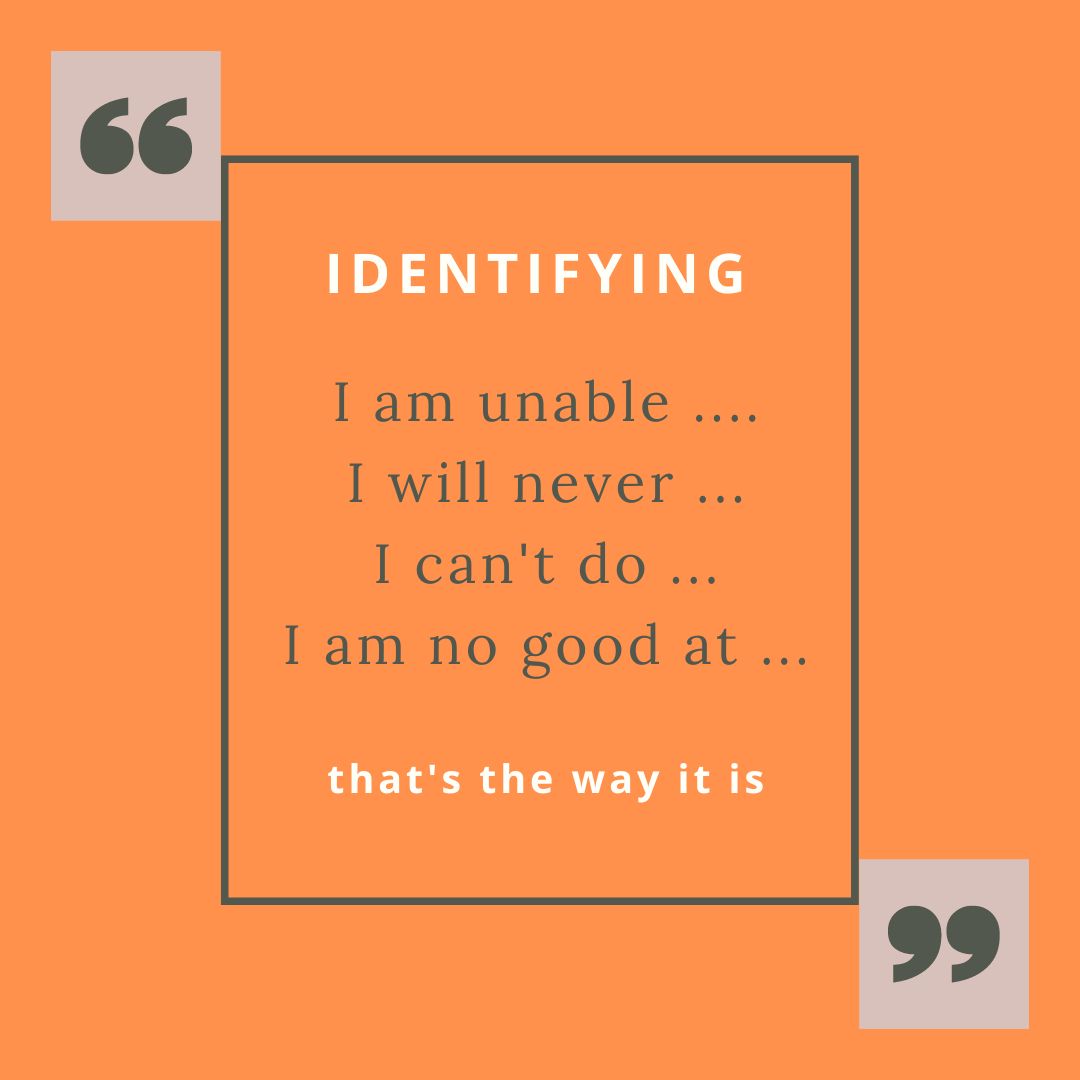
Identifying with negative feelings, such as anger, anxiety, or sadness, can be a natural response to difficult situations or experiences. However, it’s important to recognize that identifying with negative feelings can have negative consequences for our mental and emotional well-being.
Identifying with negative feelings can lead to a negative self-image. When we identify with negative feelings, we may begin to see ourselves as flawed or inadequate, which can eat away at our self-esteem and confidence. This can create a negative cycle, where we feel even more negative emotions and become more identified with them.
Identifying with negative feelings can also limit our ability to connect with others. When we are stuck in negative emotions, we can become isolated or withdraw from social interactions. This can make it difficult to build and maintain positive relationships with others.
We can also end up with a sense of powerlessness or helplessness. When we feel like we are defined by our negative emotions, we may believe that we have no control over our situation or our feelings. This can lead to a sense of hopelessness or resignation.
How does acceptance work in negative situations:
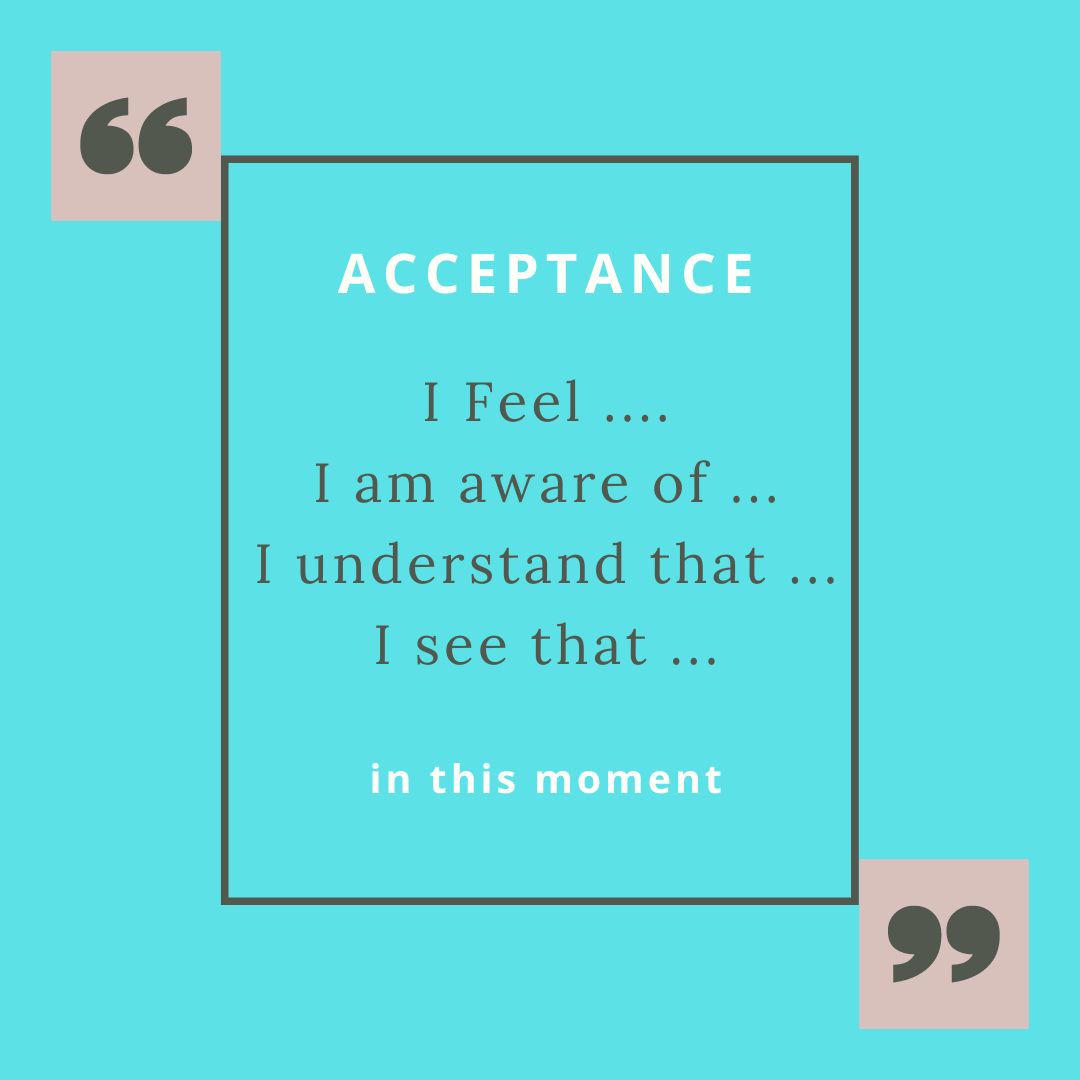
By practicing mindfulness and self-awareness we can accept that we have these feelings and thoughts and understand that there is a reason for them, without allowing them to become our reality. This involves observing our thoughts and emotions without judgment, and recognizing that they do not define us. We can also practice self-compassion and treat ourselves with kindness and understanding, even when we are experiencing negative emotions
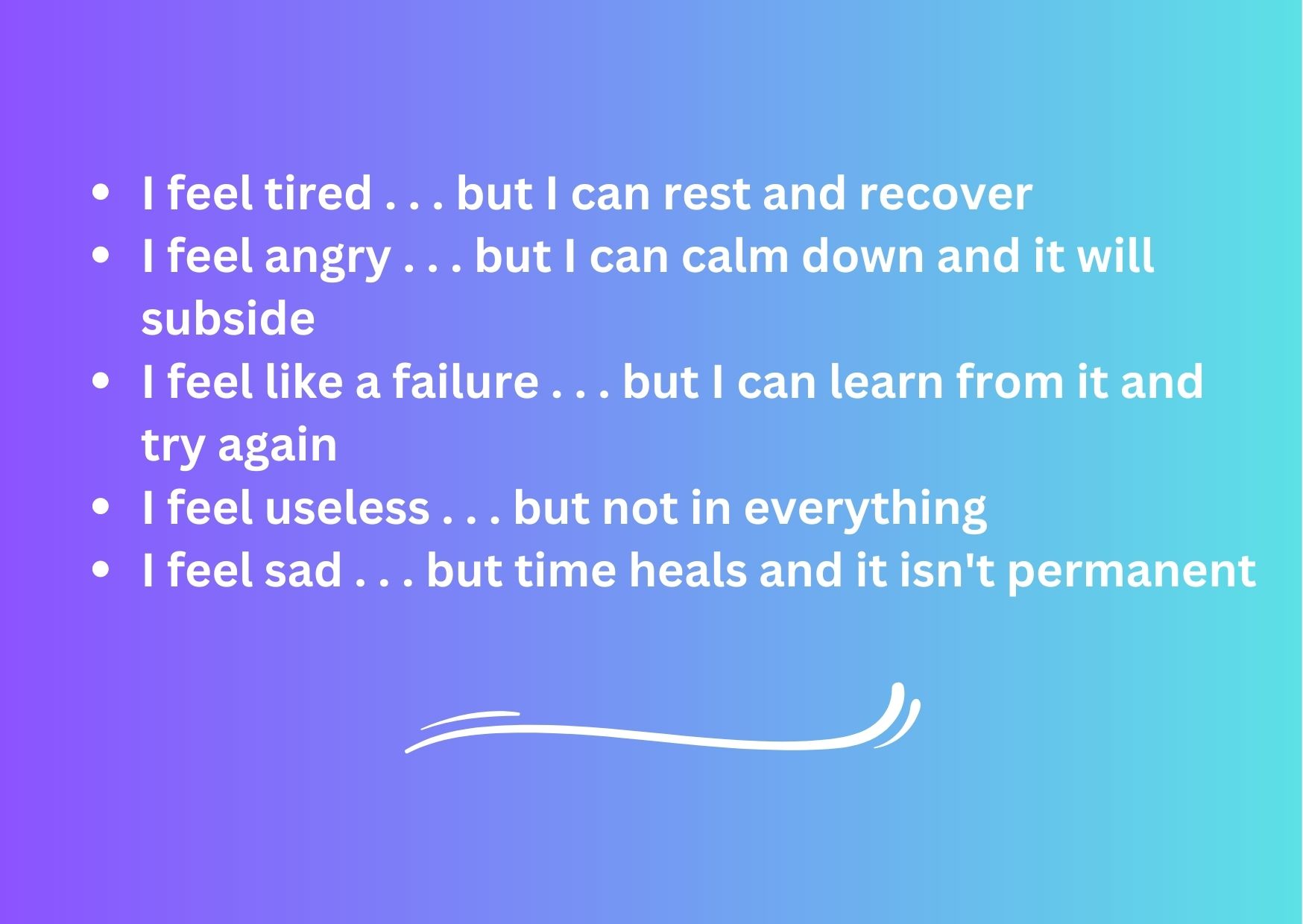
Change the dialogue of those negative feelings from ‘I am’ to ‘I feel’ like below:
I am tired
I am angry
I am a failure
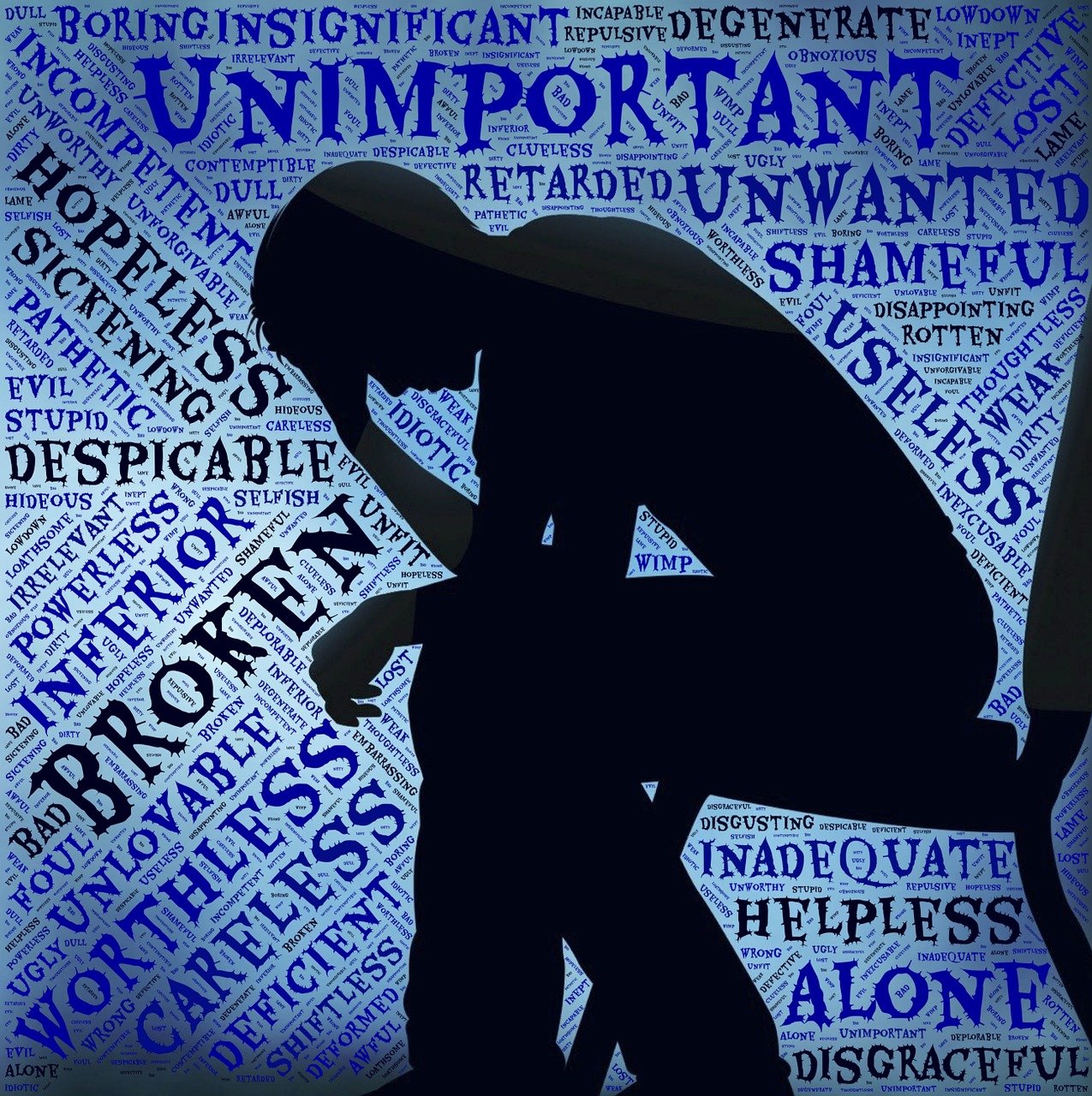
I am useless
I am sad
I feel tired
I feel angry
I feel like a failure
I feel useless
I feel sad
Can you see the difference?
When you state ‘I am’ you are affirming with your subconscious mind that something is a fact . . . your reality.
However, when you state ‘I feel’ then you are still acknowledging the negativity BUT because you have accepted it as a feeling, there is room for change because feelings are temporary.
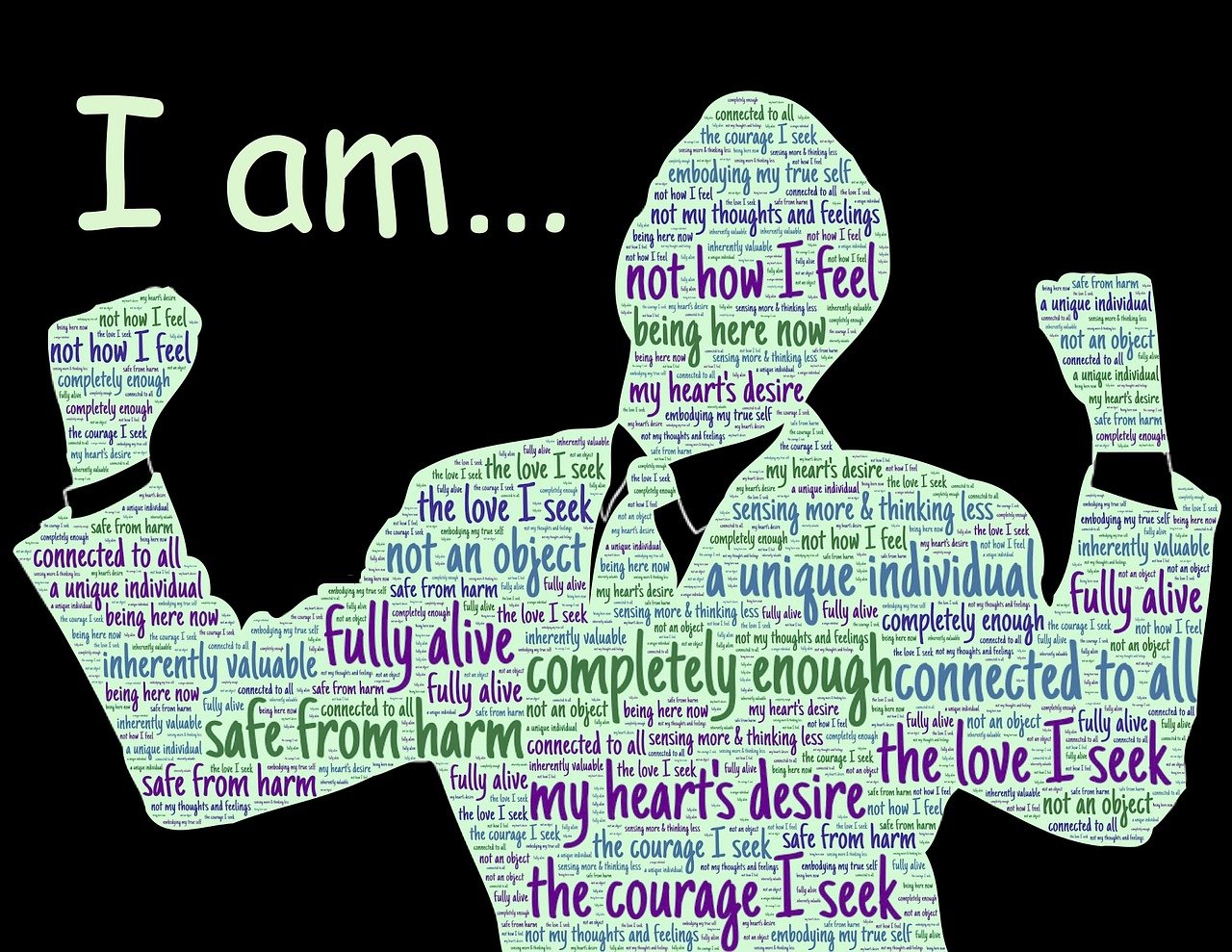
You can use ‘I am’ statements in a positive way as AFFIRMATIONS
An affirmation is a positive statement or declaration that is used to reprogram the subconscious mind with a new belief or attitude. It is a tool that can help to overcome negative thoughts and beliefs and develop a more positive mindset. Affirmations are written in the present tense and in a positive and specific manner. For example, “I am confident and capable” or “I am worthy of love and respect.” By repeating these statements to oneself regularly, you can start to internalize and believe them, which can lead to positive changes in their behaviour, emotions, and overall well-being.
By taking control of our emotions, we can change our reality and create a more positive and fulfilling life. We can improve our relationships with others, make better decisions, and feel more confident and empowered. It’s not always easy, but with practice and persistence, we can learn to manage our emotions and live a more fulfilling life.
Thank you for reading my article. I cover a range of subjects from my work as a complementary therapist, personal experiences and interests.
Thank you for taking the time to read my post. If you like this article please take look at some of my other pages or blog posts where I talk about different therapies and my own wellbeing journey and if you’d like to see future posts then please enter your email address and click on the subscribe button below and you will be notified of future content. I have no plans to use your email address for any other purpose. Feel free to share my page with anyone you feel may be interested and if you have any feedback about what I write or suggestions for further articles then please use the comment box further down the page. Warmest Wishes, Janet x
Thank you for taking the time to read my post. If you like this article please take look at some of my other pages or blog posts where I talk about different therapies and my own wellbeing journey and if you’d like to see future posts then please enter your email address and click on the subscribe button below and you will be notified of future content. I have no plans to use your email address for any other purpose. Feel free to share my page with anyone you feel may be interested and if you have any feedback about what I write or suggestions for further articles then please use the comment box further down the page. Warmest Wishes, Janet x
I’ve had a few challenges over the past few months:
Problems with inadequate hot water system and waiting for new heating system to be installed. Therefore I couldn’t have my relaxing hot baths to help with fibromyalgia pain and have to boil a kettle to wash greasy dishes.
I had a fall and injured my right shoulder which is still causing me pain, and for unknown reasons my left hip has been extremely painful so sleeping has been difficult and I haven’t been able to work.
I had a stressful time hiring a car on my trip to the UK, I won’t bore you with the details.
I had positive news at my follow-up appointment after the Cardiac Ablation procedure and they said I could come off medication but less than two weeks later my blood pressure was shot up and I was getting the occasional arrhythmia episode, so I’m back on the medication for the moment.
My washing machine and TV remote control broke down.
The heating installation finally happened but during the coldest spell of snow and ice, the original one was ripped out and the new one isn’t very warm.
I’m sure there have been more events but can’t remember everything, the thing is, I would normally have been very stressed over these events making my medical issues worse but this time I just went with the flow. It wasn’t intentional but I remained calm and carried on the best I could. I was thinking about this last night as people have been surprised at my positive attitude throughout. I realised that I had surrendered to the situations because they were out of my control so I had been in a place of acceptance and didn’t dwell on the negativity of it all. This made me think about how powerful it was to surrender.
Why is Surrendering a Good Thing?
Letting go of resistance
When we resist what is happening around us, we often create unnecessary stress and negative emotions. When we are constantly fighting against circumstances beyond our control, we can become overwhelmed and feel powerless. Surrendering helps to let go of this resistance and allows us to be more present and mindful in the moment. This can lead to a sense of peace and acceptance, which can be incredibly powerful in and of itself.
Focus on What you Can Control
Focussing on what you can control enables you to take action and put your energy towards making positive changes in your life.
Faith in the Universe
When we surrender and stop trying to control everything, we can start to trust that things will work out in the way they are meant to. This can lead to a greater sense of trust in the universe and in oneself and feelings of inner peace and tranquillity.
Opportunity for Growth
I’ve attended many personal development workshops and courses over the years including Buddhist Retreats and one thing the Buddhists taught me was to embrace difficult situations as a way to practice remaining calm amongst the chaos around you. We know that being stressed and angry doesn’t help matters and can even make them worse by causing more negative situations through our behaviour in those moments. By remaining calm we can think more clearly and feel more empowered because we are not letting them affect us negatively.
Not Giving Up
It’s important to note that surrendering doesn’t mean giving up, it means accepting reality and working with it. It’s about letting go of the need to control everything and instead, trusting the process and flow of life.
Action plan for Surrendering for Personal Growth:
Surrendering is a skill that takes time and practice to develop. It’s not something that happens overnight. Be patient with yourself and keep working on it, it can lead to significant personal growth and inner peace.
Recognize when you are resisting a situation or circumstance.
Remind yourself that resistance creates stress and negative emotions.
Practice mindfulness and focus on the present moment.
Let go of the need to control the situation and trust that things will work out as they should.
Accept the reality of the situation and work with it rather than against it.
Put your energy towards what you can control and make positive changes in your life.
Reflect on the experience and notice any changes in your mindset and emotions.
Repeat the process when faced with similar situations in the future.
Thank you for reading my article. I cover a range of subjects from my work as a complementary therapist, personal experiences and interests.
Thank you for taking the time to read my post. If you like this article please take look at some of my other pages or blog posts where I talk about different therapies and my own wellbeing journey and if you’d like to see future posts then please enter your email address and click on the subscribe button below and you will be notified of future content. I have no plans to use your email address for any other purpose. Feel free to share my page with anyone you feel may be interested and if you have any feedback about what I write or suggestions for further articles then please use the comment box further down the page. Warmest Wishes, Janet x
Thank you for taking the time to read my post. If you like this article please take look at some of my other pages or blog posts where I talk about different therapies and my own wellbeing journey and if you’d like to see future posts then please enter your email address and click on the subscribe button below and you will be notified of future content. I have no plans to use your email address for any other purpose. Feel free to share my page with anyone you feel may be interested and if you have any feedback about what I write or suggestions for further articles then please use the comment box further down the page. Warmest Wishes, Janet x
When we think about relationships we mostly think externally about how we relate to others and forget the one we should be focussing on first:
Your Relationship with Yourself
Having a healthy relationship with yourself is essential for overall well-being and happiness. Many of us spend a lot of time focusing on our relationships with others, whether it be romantic partners, friends, or family members. However, it’s just as important to nurture and maintain a positive relationship with ourselves.
Awareness
One of the most important aspects of having a good relationship with yourself is self-awareness. This means being in tune with your thoughts, feelings, and behaviours, and understanding how they impact your life. It also means being honest with yourself about your strengths and weaknesses, and accepting yourself for who you are.
Self Care
Another important aspect is self-care. This includes taking care of your physical, emotional, and mental health. This can include things like exercise, eating well, getting enough sleep, and taking time to relax and de-stress. It also means setting boundaries with others and learning to say no when necessary.
Be Kind to Yourself
In addition to self-awareness and self-care, it’s also important to practice self-compassion. This means being kind and understanding towards yourself, even when you make mistakes or fall short of your goals. It’s important to remember that everyone makes mistakes and it’s a part of the learning process.
Building a positive relationship with yourself takes time and effort, but it’s worth it. When you have a healthy relationship with yourself, you’ll be better equipped to handle challenges and setbacks, and you’ll be more confident in your ability to achieve your goals.
Ultimately, having a relationship with yourself means treating yourself with the same care, kindness and respect that you would give to a loved one. Remember that you are your own best friend, and it’s important to take care of yourself in the same way you would take care of a friend.
If you are looking to improve your relationship with yourself, try setting aside some time each day for self-reflection, practice self-compassion, and make sure to engage in self-care activities that you enjoy. With time and effort, you’ll be well on your way to a healthy, positive relationship with yourself.
Thank you for reading my article. I cover a range of subjects from my work as a complementary therapist, personal experiences and interests.
Thank you for taking the time to read my post. If you like this article please take look at some of my other pages or blog posts where I talk about different therapies and my own wellbeing journey and if you’d like to see future posts then please enter your email address and click on the subscribe button below and you will be notified of future content. I have no plans to use your email address for any other purpose. Feel free to share my page with anyone you feel may be interested and if you have any feedback about what I write or suggestions for further articles then please use the comment box further down the page. Warmest Wishes, Janet x
Thank you for taking the time to read my post. If you like this article please take look at some of my other pages or blog posts where I talk about different therapies and my own wellbeing journey and if you’d like to see future posts then please enter your email address and click on the subscribe button below and you will be notified of future content. I have no plans to use your email address for any other purpose. Feel free to share my page with anyone you feel may be interested and if you have any feedback about what I write or suggestions for further articles then please use the comment box further down the page. Warmest Wishes, Janet x
































 Solistic